
From the NC500 to Building My Own Campervan#
It all started with ten days in a hired campervan.
The pandemic was winding down, the world was slowly creaking back open, and my wife and I decided to do something we’d never done before: rent a campervan and drive the NC500 in Scotland. If you’ve never heard of it, it’s a 500-mile loop around the northern Highlands, and honestly, it’s one of those trips that rearranges something in your head. Single-track roads, lochs that look painted on, deer wandering out in front of you, beaches in the middle of nowhere that wouldn’t look out of place in the Caribbean (if you ignore the water temperature).
By day three, we’d already started saying things like “imagine if this was our van.”
By day ten, we’d caught the bug properly.
Down the YouTube rabbit hole#
When we got home, I did what every newly-obsessed person does — I opened YouTube. And then I didn’t really close it for about a year.
There’s a whole world of people out there converting old work vans into tiny rolling homes. I watched dozens of build series, probably hundreds of hours all in. Self-taught joiners, couples living full-time on the road, retired engineers over-engineering every cupboard. I was hooked.
A prebuilt campervan was never really on the table. Once you start pricing them up, you realise you’re looking at the cost of a small house extension. But more importantly, I like building things. I like the problem-solving, the measuring twice (and occasionally three times), and the quiet satisfaction of something working because you made it work.
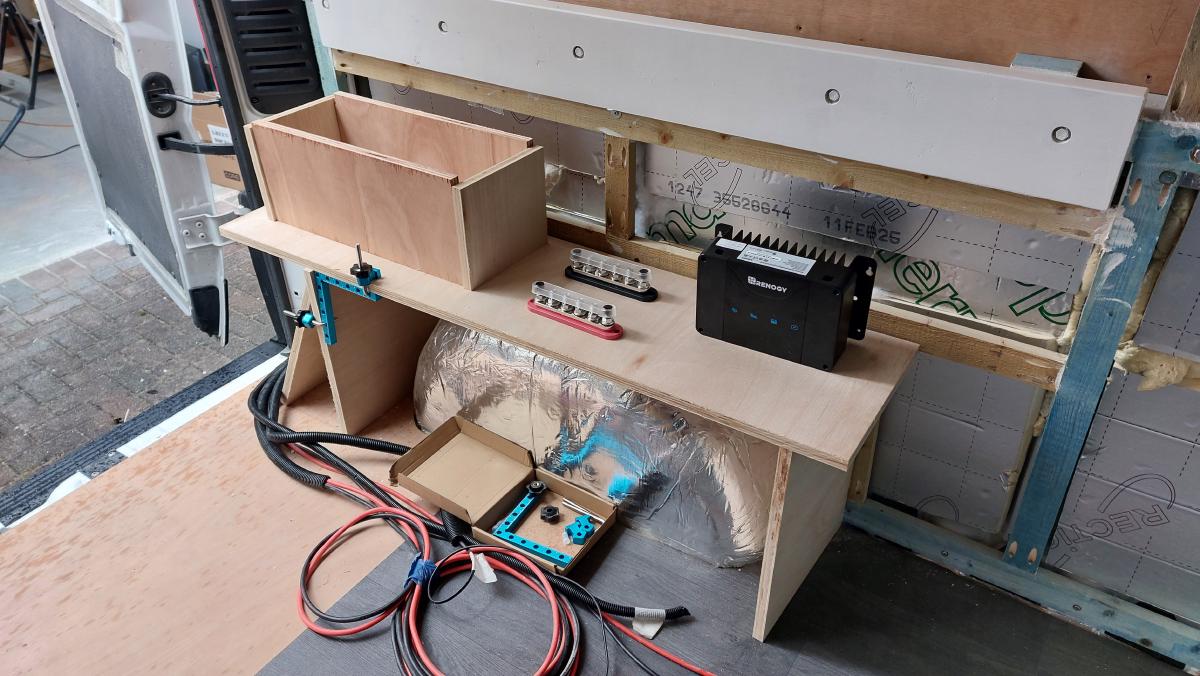
So earlier this year, I pulled the trigger and bought a two-year-old Citroen Relay, long wheel base. A proper blank canvas. Big, white, empty, and full of possibility.
What I’m building (and why)#
I’ve got a rough vision, and I’m sticking to a few guiding principles.
A fixed double bed. My cousin was the one who pushed me on this. His advice was basically: you’re going to be tired at the end of the day, and the last thing you want is to be assembling a bed like it’s a flatpack every night. Convertible layouts look clever on YouTube, but a proper made-up bed you can just flop into? That’s the dream. It also gives you loads of storage space underneath, which is a nice bonus.
Mostly 12 volt, low power. I want to keep things simple and off-grid friendly. No inverter running a microwave, no mains dependency if I can help it. Solar on the roof, a decent leisure battery, and appliances that sip rather than guzzle.
Lightweight. Every kilo you add is a kilo your engine has to haul up every Scottish hill for the rest of the van’s life. So I’m trying to be disciplined about materials, even when it’s tempting to just build everything out of nice thick ply.
Lots of wood, cabin vibes. This is the bit I’m most excited about. I want it to feel warm when you open the door. Tongue and groove, timber worktops, warm lighting — more mountain cabin than sterile RV.
It won’t be perfect, and that’s fine#
I’m going in with my eyes open. There will be wonky cuts. There will be wiring I redo. There will almost certainly be a weekend where I sit in the van with a cup of tea wondering what on earth I’ve got myself into.
But that’s sort of the point. I want to learn. I want to make mistakes I can fix. And at the end of it, I want to hand my wife the keys to something we built ourselves — and get back on the road.